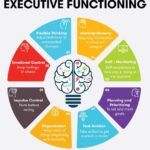
Executive Functions
Many students are not short of ambition. They want to do well, understand that deadlines matter, and often know what needs to improve. The difficulty is usually more practical. How do I start? What should I do first? Where did I put that sheet? Why have I left this until the night before again?
What are executive functions?
Executive functions are the brain’s management skills. They help us plan, organise, prioritise, manage time, regulate attention, and move from intention into action.
In college life, these skills are used constantly. They are needed for recording homework, keeping notes in order, preparing for assessments, breaking down revision, and starting independent work after a long day. A student can be bright, thoughtful, and engaged in lessons, but still struggle with these practical demands.
Why does planning sometimes fall apart?
Planning often fails because the task is too vague. “Revise Biology” sounds sensible, but it does not say which topic, what method, how long for, or what finished looks like. The student then has to make too many decisions before the work has even started.
A better plan is specific and small. “Complete ten respiration questions and mark them” is easier to begin. “Spend twenty minutes making flashcards on attachment theory” is clearer than “revise Psychology”. The more concrete the task, the less energy is lost deciding what to do.
Why does organisation matter?
Organisation reduces friction. If notes are spread across loose paper, emails, photographs, online files, and old notebooks, starting work becomes harder than it needs to be. The student has to find the work before they can do the work.
Simple systems are usually best. One place for deadlines. One folder per subject. Clearly named documents. A weekly check of loose notes. A short list showing what needs to be done next. None of this needs to be perfect. It needs to be easy enough to keep using.
Is procrastination just laziness?
Usually, no. Procrastination can look like laziness from the outside, but it often feels very different from the inside. Many students who procrastinate are not calmly ignoring the work. They feel anxious, guilty, irritated, or stuck.
A task may be avoided because it feels too large, too boring, too unclear, or too important. Perfectionism can also play a part. If the first sentence has to be excellent, the blank page becomes much harder to face.
This is why “just get on with it” rarely works. A better question is, “What is the smallest possible start?” Open the document. Write the title. Read the question. Make three rough bullet points. Work for ten minutes only. The first step does not need to be impressive. It just needs to happen.
What actually helps?
The most useful strategies are often very ordinary. Make tasks smaller than feels necessary. Decide on the first task the night before. Keep the phone physically away for the first stretch of work. Use short timers when resistance is high. Write tasks as actions, not vague intentions. Avoid waiting to feel ready.
Executive functioning skills can improve with practice, structure, and repetition. The aim is not perfection. It is helping students build routines they can return to when things feel messy.
Further Information:
Related Links



Latest News
 University Destinations 2026August 14, 2026
- A Level Results 2026August 14, 2026
- Science PracticalsMay 10, 2026
- Executive FunctionsApril 9, 2026
- Student DiscussionMarch 16, 2026